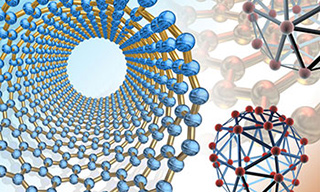
Introduction of Nanomaterials
SYLLABUS
Fiche de contacte
Intervenant : Roucham Zahira
E-mail : rouchem.zahira@univ-bechar.dz
UE : Transversal
Module : Nanomaterials
Horaires : 1h30
Cours Magistral : 1 Cr
Langues : Anglais
Objectif
Understand the fundamental concepts of nanomaterials and their scientific and technological importance.
- Identify and describe the different methods for synthesizing and characterizing nanomaterials.
- Analyze the specific properties of nanomaterials and their implications in analytical sciences.
- Apply the acquired knowledge to concrete application areas (health, environment, sensors, catalysis, etc.).
- Evaluate the ethical, regulatory, and environmental issues related to the handling and use of nanomaterials.
Contenue de l’unité
Chapter 1 – Introduction to Nanomaterials (2 weeks)
• Definitions and terminology (nano-objects, nanoparticles, nanocomposites, etc.)
• History and evolution of nanoscience
• Properties specific to the nanoscale: size effect, specific surface area, modified electronic, optical, and mechanical properties
• Application areas: health, energy, environment, catalysis, analytics, etc.
Chapter 2 – Nanomaterial Synthesis Methods (3 weeks)
• Top-down approach (milling, lithography, machining)
• Bottom-up approach (self-assembly, precipitation, sol-gel, hydrothermal synthesis, CVD, etc.)
• Control of size, shape, and crystalline structure
• Influence of synthesis conditions (pH, temperature, solvents, stabilizing agents)
• Examples of syntheses of metallic nanoparticles, oxides, polymers, and hybrid nanostructures
Chapter 3 – Nanomaterial Characterization Techniques (3 weeks)
• Microscopy: TEM, SEM, AFM (resolution, sample preparation, image interpretation)
• Diffraction and structural analysis: XRD, SAXS
36/57
• Chemical and spectroscopic analysis: XPS, FTIR, UV-Vis, Raman, EDX
• Particle size and surface analysis: DLS, BET, zeta potential
Chapter 4 – Analytical properties of nanomaterials (2 weeks)
• Role of nanomaterials in improving the sensitivity and selectivity of chemical sensors and biosensors
• Catalytic properties and applications in detection (SERS, electrochemistry)
• Nanomaterials as immobilization supports (enzymes, antibodies, etc.)
• Case studies: gold nanoparticles, carbon nanotubes, quantum dots
Chapter 5 – Challenges, safety, and prospects of nanomaterials (2 weeks)
• Toxicological and ecotoxicological aspects
• Safety standards, REACH regulations, and laboratory handling
• Sustainable development and environmental impacts
• Current innovations and future prospects (nanoanalytics, nanomedicine, etc.)
Méthode d’enseignement :
Une Semaine en ligne et Semaine de présence.
Compétences ou capacités qui seront évaluées
Utilises les exposes pour les étudiants.
Mode d’évaluation
|
Modalité |
Pondération |
|
Assiduité |
|
|
Rendu (examen partiel) |
|
|
Examen final |
100 % |
Bibliographie
1. Cao, G., & Wang, Y. (2011). Nanostructures and nanomaterials: Synthesis, properties and applications. World Scientific.
2. Chattopadhyay, K. K., & Banerjee, A. N. (2012). Introduction to nanoscience and nanotechnology. PHI Learning.
3. Kulkarni, S. K. (2015). Nanotechnology: Principles and practices. Springer.
4. Pierson, H. O. (1999). Handbook of chemical vapor deposition (CVD): Principles, technology and applications. Noyes Publications.